From Concept to Container: The 90-Day OEM Musical Movement Production Workflow
The 90-day OEM musical movement production workflow is the system that gets a custom melody from artwork sign-off to a sea-freight container at Ningbo port — and it is the workflow that surprise-bites the buyers who treat musical movements like generic plastic parts. A 30-note cylinder engraving cannot be rushed past the tooling cycle, a custom melody cannot be re-recorded after the disc is stamped, and a strike-off sign-off cannot be skipped without risking a 30,000-unit re-run. This article walks through the 90-day workflow that Ningbo Yunsheng Musical Movement Manufacturing runs on every custom OEM order, so buyers can plan their inventory cycles, sequence their campaigns, and avoid the late-Q3 panics that push half of the global supply chain into the same freight window.
1. Why a 90-Day Production Workflow Is the 2026 OEM Buyer’s Safety Net
Custom OEM musical movements are not a commodity category. Each cylinder engraving is a one-time physical commitment — once the cylinder is stamped, the art cannot be undone. Each disc is a stamping tool that wears down over a finite run. Each melody is a recording that has to be played back through the specific movement layout the buyer has chosen. All of this means the 90-day workflow is not a Yunsheng convention; it is a physical reality of cylinder and disc engraving physics.
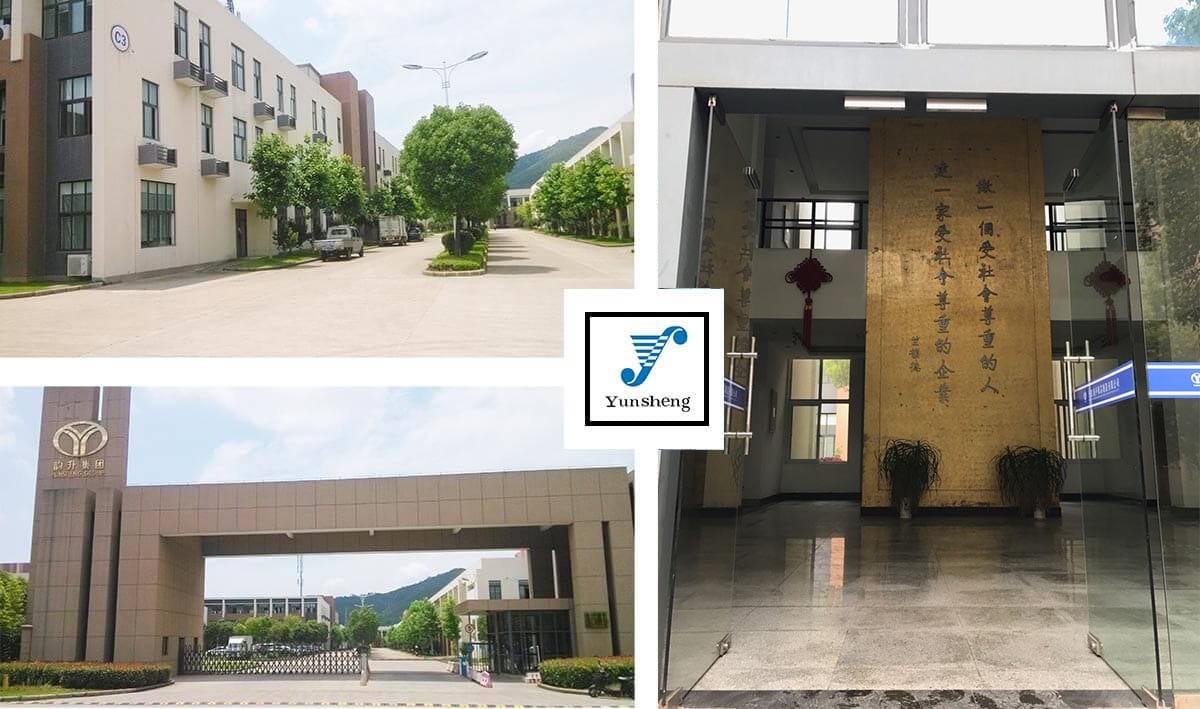
The 90-day OEM musical movement production workflow — from concept lock and strike-off validation to cylinder engraving, mass production QC, and sea freight container loading. Photo: Ningbo Yunsheng Musical Movement Manufacturing Co., Ltd..
Buyers who treat the 90-day workflow as a safety net rather than a production delay are the ones who consistently hit their season windows. The major risks a 90-day workflow protects against are: (1) artwork sign-off without a strike-off, which pushes the cost of a colour or scale error onto the production run; (2) cylinder tooling without a pre-production sample, which exposes the buyer to a 30,000-unit re-engraving cost if the disc reads wrong on the first production batch; (3) mass production without an AQL inspection plan, which means defects only surface after the container is loaded; and (4) sea freight booking at the last week, which locks the cargo into the most expensive freight window of the quarter.
Affiliated to Yunsheng Group, Ningbo Yunsheng Musical Movement Mfg. Co., Ltd. (which created China’s first IP musical movement in 1992) has specialized in musical movements for decades. As a global leader with over 50% global market share, it offers hundreds of functional musical movements and 4,000+ melodies. The 90-day workflow is the system that supports that scale — and it is the system that any buyer, regardless of MOQ, can plug into as long as the artwork sign-off date is set in advance.
2. Day 1–10: Concept Lock & Artwork Brief
The first ten days of the workflow are the most underestimated. Concept lock is the phase where the buyer and the manufacturer agree on the scope of the order: melody count, cylinder or disc engraving format, base movement type, MOQ, target delivery date, and the artwork delivery deadline. Missing any one of these turns the rest of the workflow into a guessing game.
For buyers new to the musical movement category, the concept lock typically covers four decisions: the movement type (spring-driven, hand-crank, battery-operated, or paper-strip), the note count (18-note, 22-note, 30-note, or fully custom), the cylinder or disc layout, and the melody selection (stocked 4,000+ melody library or fully custom recording). For buyers who already have a Yunsheng catalogue reference, the concept lock collapses to a 3-day turnaround because the artwork and movement spec are already on file.
The artwork brief delivers the printable outline for the engraving. For cylinder engraving, the artwork is typically delivered as a 300-dpi vector file with the pin layout notes. For disc engraving, the artwork is typically a 300-dpi bitmap with the punch pattern. Yunsheng’s pre-press team handles the engraving prep, but the buyer must approve the pin layout or punch pattern within the 10-day window — late approvals push the calendar back day-for-day.
3. Day 11–25: Strike-Off & Mechanical Sample Validation
The strike-off phase produces the first physical proof of the artwork. For a cylinder engraving, this is a hand-engraved proof cylinder that reads the melody at the correct pitch and timing. For a disc engraving, this is a sample disc cut on a test press. The strike-off is the buyer’s chance to confirm colour, scale, registration, and melody alignment before the production tooling is committed.
Yunsheng’s strike-off lead time is 15 days for fully custom artwork and 7 days for re-orders from existing artwork files. The strike-off is delivered as a physical sample, not a digital proof — the buyer needs to hear the cylinder play through the actual movement mechanism to confirm the melody reads correctly in the target housing. This is the part of the workflow that buyers most often try to skip, and it is the part that drives the most 30,000-unit re-runs in the industry.
Sample validation runs in parallel with the strike-off approval. The mechanical sample confirms that the cylinder or disc fits the movement housing, the spring torque matches the spec, and the sound output reads at the target decibel range. For buyers specifying custom melodies, the mechanical sample is the one physical proof that the recording reads correctly when played through the target packaging. Both the strike-off and the mechanical sample must be approved by the buyer before the workflow enters the tooling phase.
4. Day 26–45: Custom Tooling & Cylinder/Disc Engraving
The tooling phase is the longest fixed phase in the workflow and the one that cannot be compressed. Cylinder engraving requires a precision lathe to cut the pin pattern into a brass cylinder, and the cutting cycle is 14–18 days for a 30-note movement. Disc engraving requires a stamping tool, and the stamping cycle is 10–14 days for a 30-note movement. The 20-day tooling window accounts for the cutting cycle plus a 2–4 day buffer for tool inspection and verification.
For spring-driven movement orders, the tooling phase also includes the spring winding calibration. The spring is the power source for the movement, and the torque calibration determines how many melody cycles the movement can play before the spring winds down. Yunsheng’s standard spring calibration is 18–22 melody cycles per full wind, which is the benchmark most buyers specify for jewelry-box and gift applications.
Buyers who try to compress the tooling phase by paralleling the engraving with the artwork approval typically discover that the engraving cycle is the bottleneck. The 20-day tooling window is consistent with the standard 18–22 day cycle for small-batch mechanical tooling published in the WIPO small-batch manufacturing reference. The 20-day tooling window is consistent with the standard 18–22 day cycle for small-batch mechanical tooling published in the WIPO small-batch manufacturing reference. The cylinder cannot be cut without an approved pin layout, and the disc cannot be stamped without an approved punch pattern. The 20-day tooling window is the physical floor of the workflow, and it is the variable that drives the 90-day total.
5. Day 46–60: Pre-Production Run & Lab Dip Approval
The pre-production run is the first physical batch produced on the production tooling. For a 30,000-unit order, the pre-production run is typically 300 units, produced on the actual production cylinder or disc. The run is not a saleable batch — it is the final physical proof that the production tooling matches the strike-off and the mechanical sample.
Lab dip approval covers the colour match between the printed artwork and the cylinder or disc finish. Yunsheng’s standard lab dip is a Pantone-matched colour proof on the actual substrate (brass for cylinders, zinc alloy for discs). The buyer has 48 hours to approve the lab dip; late approvals push the calendar back day-for-day.
The pre-production run serves three purposes: (1) it confirms the production tooling matches the strike-off, (2) it confirms the lab dip colour is consistent across the batch, and (3) it produces the first reference units for the buyer’s marketing team. The third use case is often overlooked — boutique buyers frequently use the pre-production run units for catalogue photography and trade-show samples, which means the pre-production run is also a marketing deliverable.
6. Day 61–75: Mass Production QC & AQL Inspection
The mass production phase runs 15 days for a 30,000-unit order. Yunsheng’s standard production output is 2,000 units per day per production line, and a 30,000-unit order runs on 2 lines for 7–8 days plus 7 days for QC and packaging. The 15-day window is the production cycle plus the QC cycle, with a 2-day buffer for the AQL inspection report.
Quality control runs on a 2.5% AQL sampling plan for finished movements, with 100% inspection on the cylinder or disc engraving. The AQL sampling covers sound output, mechanical torque, spring calibration, and visual engraving accuracy. Each carton is serialized, and the buyer receives a batch-level QC report covering all four metrics before container loading.
For buyers specifying custom melodies, the QC phase also includes a sound-output verification. Yunsheng’s sound-output check confirms that the melody reads at the correct pitch and timing across the batch. The check is performed on a 1% sample of each lot, and the results are logged in the batch-level QC report. Buyers who require tighter sound-quality control can request a 5% sample check, which adds 1–2 days to the QC phase.
7. Day 76–85: Export Packaging & Container Loading
The export packaging phase runs 10 days for a 30,000-unit order. Yunsheng’s standard export packaging is a 5-ply corrugated carton with foam inserts, designed for 40-foot high-cube sea freight containers. The 10-day window covers the inner-box assembly, the master carton packing, the carton serialization, and the pallet preparation for container loading.
Buyers who specify custom retail packaging — gift boxes, blister packs, or branded master cartons — should add 5–7 days to the packaging phase. Custom packaging requires the artwork to be approved during the concept lock phase, otherwise the packaging phase pushes the calendar back by the artwork approval lead time. Yunsheng’s in-house packaging team handles the structural design, but the buyer’s brand team must approve the structural mock-up before the packaging run begins.
Container loading is the final physical step before the cargo leaves Yunsheng’s Beilun facility. The 40-foot high-cube container takes approximately 28 master cartons per pallet and 20 pallets per container, for a total of 560 master cartons per container. The 30,000-unit order fills approximately 50% of a 40-foot high-cube container. Buyers who need full-container loads can scale the order to 60,000 units, which fills the 40-foot high-cube container at standard packaging density.
8. Day 86–90: Sea Freight Booking & Customs Clearance
The final 5 days of the in-house workflow cover the sea freight booking and the export customs clearance. Yunsheng’s standard incoterm is FOB Ningbo, which means the buyer’s freight forwarder picks up the container at Ningbo port. The 5-day window covers the freight booking confirmation, the export declaration, the container inspection at the port, and the loading onto the sea vessel.
For buyers specifying CIF or DDP terms, the freight window expands by 5–7 days for CIF (to cover the destination port handling) and 3–5 additional days for DDP (to cover the destination-country customs clearance). The 90-day workflow is anchored on FOB Ningbo; CIF and DDP run on the same workflow with a longer freight window.
The sea transit itself runs 18–25 days from Ningbo to the US West Coast, 28–32 days to the US East Coast, 22–28 days to North Europe, and 12–18 days to Southeast Asia and the Middle East. Adding the transit time to the 90-day in-house workflow gives the buyer a total lead time of 108–122 days from artwork sign-off to delivery at the destination port. Buyers who plan around this 4-month total are the ones who consistently hit their season windows. The container loading density follows the standard 40-foot high-cube specification published by the International Organization for Standardization for export packaging of small mechanical components.
90-Day OEM Buyer’s Checklist
The 90-day workflow runs clean when the buyer prepares for it in advance. The following checklist covers the 12 items that should be confirmed before the artwork sign-off date, so the workflow can run on the standard 90-day calendar.
- Melody selection. Confirm the melody choice from the stocked 4,000+ melody library, or commission a custom recording at least 10 days before the artwork sign-off.
- Movement type. Confirm the movement type (spring-driven, hand-crank, battery-operated, or paper-strip) and the note count (18-note, 22-note, 30-note, or custom).
- Cylinder or disc layout. Approve the pin layout for cylinder engraving or the punch pattern for disc engraving at least 5 days before the artwork sign-off.
- Lab dip colour reference. Provide the Pantone reference or the physical colour sample for the lab dip approval.
- Strike-off delivery address. Confirm the courier account or the local address for the strike-off delivery on day 15.
- Pre-production run size. Confirm the pre-production run size (typically 1% of the production order, with a 300-unit minimum).
- AQL sampling plan. Confirm the AQL sampling plan (standard 2.5%, or the buyer’s custom sampling plan).
- Retail packaging artwork. Approve the retail packaging artwork at least 5 days before the artwork sign-off, otherwise the packaging phase pushes the calendar back.
- Carton serialization. Confirm the carton serialization format (alphanumeric, barcode, or QR code).
- Incoterms. Confirm the incoterms (FOB Ningbo, CIF, or DDP) and the freight forwarder contact for the booking on day 86.
- Destination port. Confirm the destination port for the sea transit, including any port-specific documentation requirements.
- QC report delivery. Confirm the QC report delivery format (PDF, CSV, or the buyer’s custom ERP integration).
For buyers who want to lock the 90-day calendar around a specific delivery date, the reverse-planning approach is straightforward: take the desired delivery date at the destination port, subtract the sea transit (18–32 days depending on the destination), subtract the 90-day in-house workflow, and the resulting date is the artwork sign-off date. Submit the spec to Yunsheng at least 5 days before that date so the manufacturer can confirm capacity. The musical movement category page on the Yunsheng site lists the available movement types and the note count options, and the spring-driven movement page covers the most common cylinder engraving construction. For a quote on a specific spec, the fastest path is to contact Yunsheng directly with the movement type, the note count, the melody, and the target delivery date.
9. Frequently Asked Questions & 90-Day Workflow Checklist
How long does a custom OEM musical movement order take from artwork approval to delivery?
For a typical custom-melody OEM musical movement order landed at 50,000 units, the standard timeline is 90 days from artwork sign-off to sea-freight container loading. The 90 days break down into 10 days concept lock, 15 days strike-off and mechanical sample validation, 20 days custom tooling and cylinder or disc engraving, 15 days pre-production run and lab dip approval, 15 days mass production QC, 10 days export packaging, and 5 days for sea freight booking and customs clearance init.
What is the minimum order quantity for a custom melody at Yunsheng?
Custom melodies at Yunsheng start at 1,000 units for stocked 18-note movements and 3,000 units for fully custom artwork with cylinder or disc engraving. Stocked melodies can be ordered in 500-unit increments for testing and small-batch boutique programs.
Can the 90-day workflow be compressed for urgent restocks?
Yes, but only if the artwork is already on file and the cylinder tooling exists. In that case, an urgent re-stock run can be compressed to 35–45 days by overlapping the strike-off and pre-production phases. Fully new artwork cannot be compressed below 70 days because the cylinder engraving and tooling cycle are physically fixed.
What types of musical movements are best suited for the 90-day OEM workflow?
Spring-driven movements, hand-crank movements, and cylinder-engraved 18-note to 30-note movements are the three categories that consistently run clean on the 90-day workflow. Battery-operated movements and paper-strip movements can also run on the same timeline but require additional electronics component lead time, which is typically 5–10 days longer.
What is the difference between a strike-off and a pre-production sample?
A strike-off is the first physical proof of the printed artwork, produced on a lab printer or test cylinder, used to confirm colour, scale, and registration before tooling is committed. A pre-production sample is the first piece produced on the actual production tooling — it confirms the artwork matches the strike-off once the cylinder or disc is engraved. Most buyers request both, 15 days apart.
How does Yunsheng manage quality control during the 75-day mass production phase?
Quality control at Yunsheng runs on a 2.5% AQL sampling plan for finished musical movements, with 100% inspection on the cylinder or disc engraving. Each carton is serialized, and buyers can request batch-level QC reports covering sound output, mechanical torque, and visual engraving accuracy. Inspection photos and the QC report are sent to the buyer before container loading.
What incoterms does Yunsheng support for the 90-day workflow?
Yunsheng supports FOB Ningbo, CIF, and DDP terms at the buyer’s request. The 90-day workflow assumes FOB Ningbo as the baseline; CIF adds 5–7 days for freight booking and sea transit confirmation, and DDP adds another 3–5 days for the destination-country customs clearance.
About the Author
Yunsheng is the Sales Manager at Ningbo Yunsheng Musical Movement Manufacturing Co., Ltd. Affiliated to Yunsheng Group, Ningbo Yunsheng Musical Movement Mfg. Co., Ltd. (which created China’s first IP musical movement in 1992) has specialized in musical movements for decades. As a global leader with over 50% global market share, it offers hundreds of functional musical movements and 4,000+ melodies.
For OEM specifications, custom melodies, and 90-day production calendar confirmation, contact Yunsheng.